
After more than 25 years as a health professional, the moment I still look forward to most is a quiet one. Someone I am working with stops being busy being busy. They begin to notice their own patterns, and they find a pause that gives them a choice. Very often, this is where recovery from leadership burnout really begins. Here is why that pause starts in the body, and what it means for leaders, organisations and the lives we are working so hard to create.
The moment I see someone I work with leading their team with more capacity

A leader showing up with renewed energy, clarity and confidence. Relaxed shoulders, open body language and genuine connection reflect the shift from simply managing demands to leading with greater presence, capacity and purpose
There is a moment in my work I look forward to more than any other
It doesn’t often arrive as an announcement. In fact it’s often quiet, like when they walks into a session and something about them, the way they carry themselves, theres a change. These changes can often be seen physically in the way their shoulders have dropped, the subtle changes in their breathing, slow inhalation from a calm presence and more noticeable in the way they look up when they speak.
It’s the moment I see someone begin to reconnect with a deeper part of themselves.
More than feeling less stressed
Feeling less stressed, sleeping a little better and having more energy all matter. But what I’m describing goes deeper than that.
It’s watching someone move from surfing through life, going through the motions and being busy being busy, to actually connecting with themselves. They become more conscious of how they live, think, feel and respond to the world around them.
I see it in their demeanour. I see them more relaxed, more grounded, more at ease in themselves. There is a different quality to their presence, like they have more space, inside and out.
When I find out wha’s changed, I hear that their conversations have become deeper, they listen differently, with more presence. They are present with the people around them, instead of always operating from the next task, the next meeting, the next thing that needs doing.
And the biggest difference translates into the way they work, as they realise that being busy isn’t the same as being productive. They notice where their energy goes and do less, and what they do is more intentional, more focused and often of far higher quality.
A conscious choice was her biggest shift…
Michelle is a senior leader. She's highly capable, she’s conscientious and someone her team relies on. However, she's also a perfectionist, she says she always has been and she likes to be in control, rarely delegates properly and has a habit of putting everyone else's needs before her own.
For years, she's told herself that this is simply who she is.
When she's tired, she pushes through and skips lunch. She admits that when she feels overwhelmed, she tries to distract herself and that usually becomes a snack or another coffee, when we first met she was on 7 cups of coffee a day! But because she falls asleep as soon as her head hits the pillow, she didn’t believe it was negatively affecting her in any way, despite frequently waking up at 3am to go to the washroom. She knows she should make time for herself, but there's always something more important to do.
The interesting shift begins when Michelle starts noticing these behaviours.
One morning, she catches herself automatically agreeing to take on another piece of work and normally, she would say yes without thinking. But since learing about the power of pause, she puts it into practice and she pauses.
What this pause did for her in this situation…
Well as she talks to me, she tells me about the significant changes, like being able to step away from an immediate response to recognising the familiar feeling, the need to be helpful, to avoid disappointing someone and to maintain control. And instead of automatically responding, she asks herself: Do I actually have the capacity to take this on?
In that moment, from a power of pause and self reflection, she decides to delegate it.
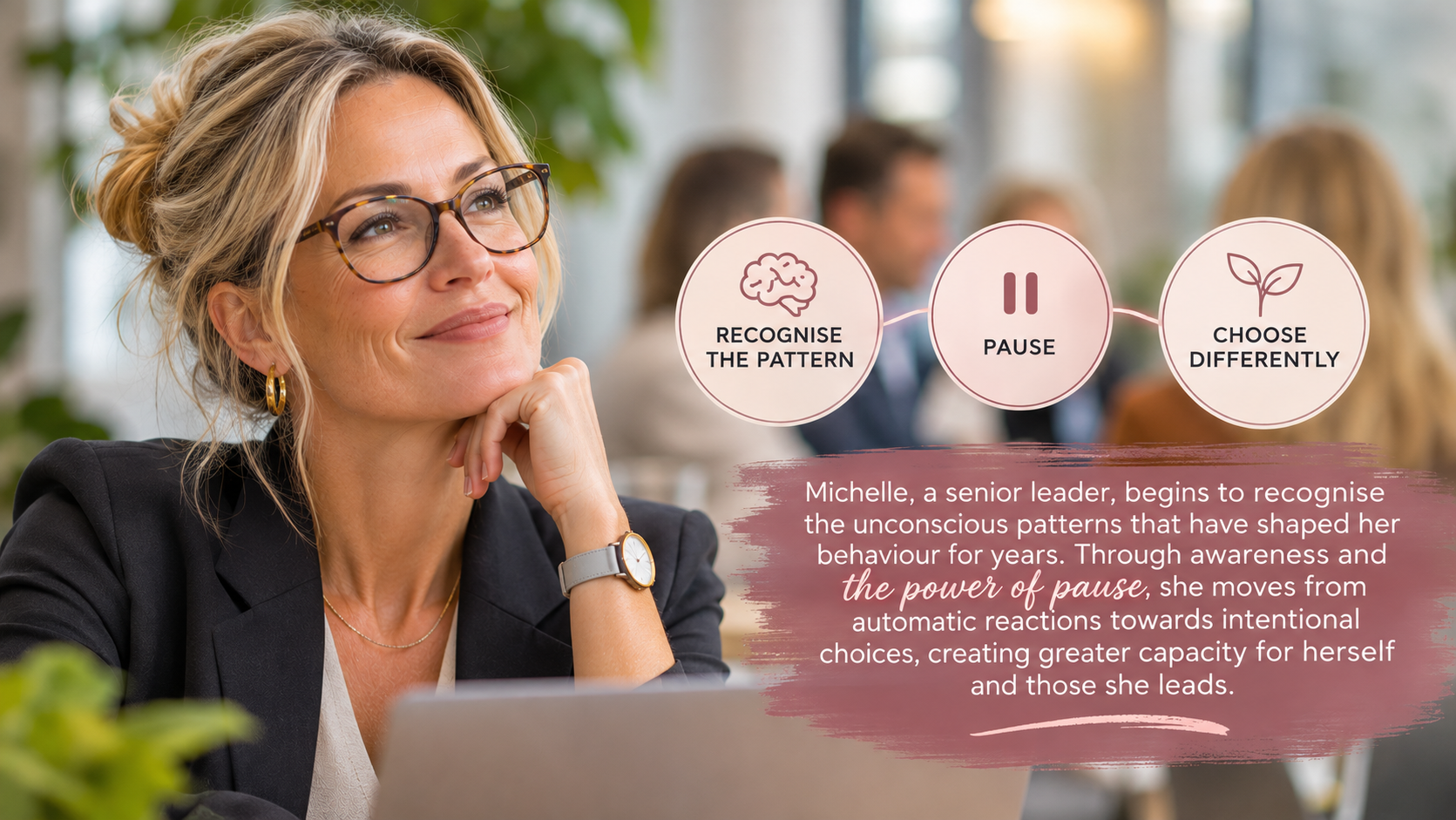
An individual develops greater awareness of their automatic behaviours and begins using the power of pause to make more intentional choices. By learning to delegate, recognise personal needs and challenge familiar excuses, they build greater energy, resilience and capacity to lead themselves and others.
On another day, she notices herself reaching for another coffee because she's exhausted. Rather than judging herself or simply following the habit, she pauses to consider what she actually needs and whilst it varies from needing a break for a proper lunch, or a short walk away from her tasks or simply five minutes away from her screen, she recognises she needs a pattern interupt.
Another thing I loved about Michelle’s feedback interview was the response that follows when her mind tells her she hasn't got time for movement, she recognises that familiar excuse rather than automatically accepting it and chooses whether she willing accepts the excuse, or chooses another response,
None of these moments is particularly dramatic, but something significant is happening, a certain cognitive rewiring of automatic responses.
Michelle is beginning to create space between what she experiences and how she responds, she's moving away from automatic reactions towards more conscious choices.
She's no longer simply being driven by her patterns, but more consciously beginning to recognise them, understand them and choose differently.
And that is where real behavioural change begins.
Why burnout recovery begins in the body
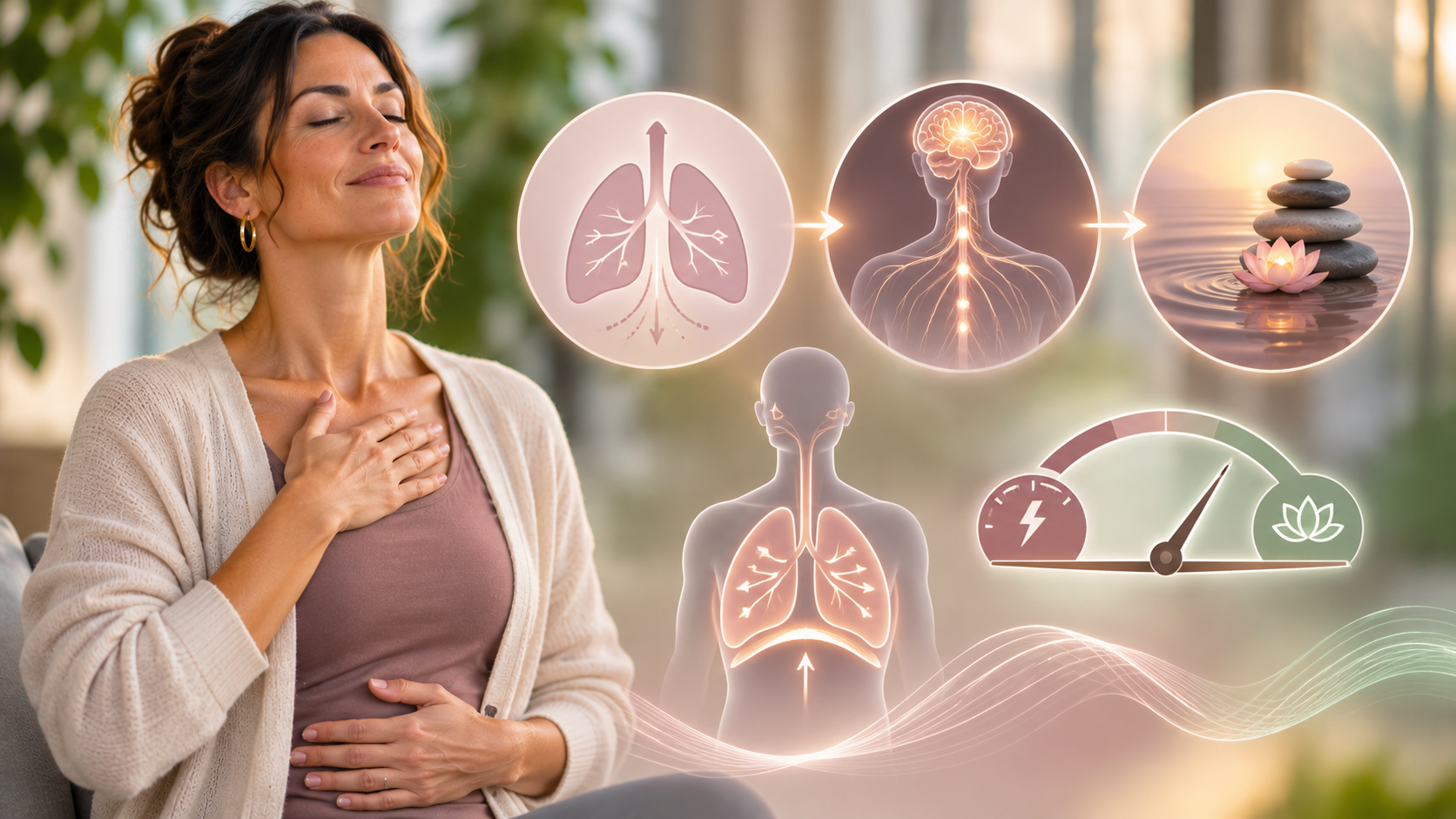
Conscious breathing as a gateway to nervous system regulation. The visual illustrates the connection between respiratory function, brain activity and the body's transition towards a calmer physiological state, highlighting the importance of working with the body to create sustainable changes in behaviour, wellbeing and performance.
After 25+ years as a respiratory physiotherapist in the NHS, I’ve learned that this pause is not just a mindset, it’s physiological.
When we live under constant pressure, the body learns to stay on alert, where the breathing becomes shallow and quick and the nervous system leans on its stress response. This is when we react before we have had time to think. We can’t make changes with willpower either because the body is still telling us we are not safe, so will remain in stress zone.
So much of my work starts with the breath. It is one of the few levers we can control consciously to govern the nervous system. As breathing slows and deepens, the body begins to feel safe enough to rest and recover, and that is often where the pause first appears.
I don’t believe we can sustainably change how we think, behave and perform without understanding what is happening within the body.
Small changes that become personal

People begin to embrace a more conscious approach to health through the six pillars of Lifestyle Medicine: nutrition, movement, sleep, stress management, social connection and reducing harmful substances. Small, sustainable lifestyle changes become meaningful choices as he develops a deeper understanding of his body's needs and how everyday behaviours influence long-term health and wellbeing.
I love seeing this awareness find its way into everyday life.
People begin to make small, realistic changes through the pillars of Lifestyle Medicine and they become more mindful of how they eat, how they move, how they sleep, how they manage stress and how they connect with others. They do this because they are beginning to understand what their body needs, and why those choices matter.
The changes become personal, more meaningful and therefore more sustainable.
And then there is the gratitude

A profound shift in self-awareness, recognising that long-standing behaviours are patterns rather than fixed parts of her identity. This renewed sense of agency creates a ripple effect across her leadership, communication, decision-making, family relationships, health and everyday life.
When people reach the end of the four month programme and look back, I love hearing them describe it as one of the biggest shifts in their lives, because their relationship with themselves has changed
They start to understand themselves differently and they are more consciously seeing that some of the ways they have been living and working are just patterns and not fixed parts of who they are. People then realise they have more agency than they thought.
And that awareness ripples into everything else.
How they lead
How they communicate
How they make decisions
How they relate to their families
How they look after their health
How they experience their everyday lives
What this means for leadership teams and organisations
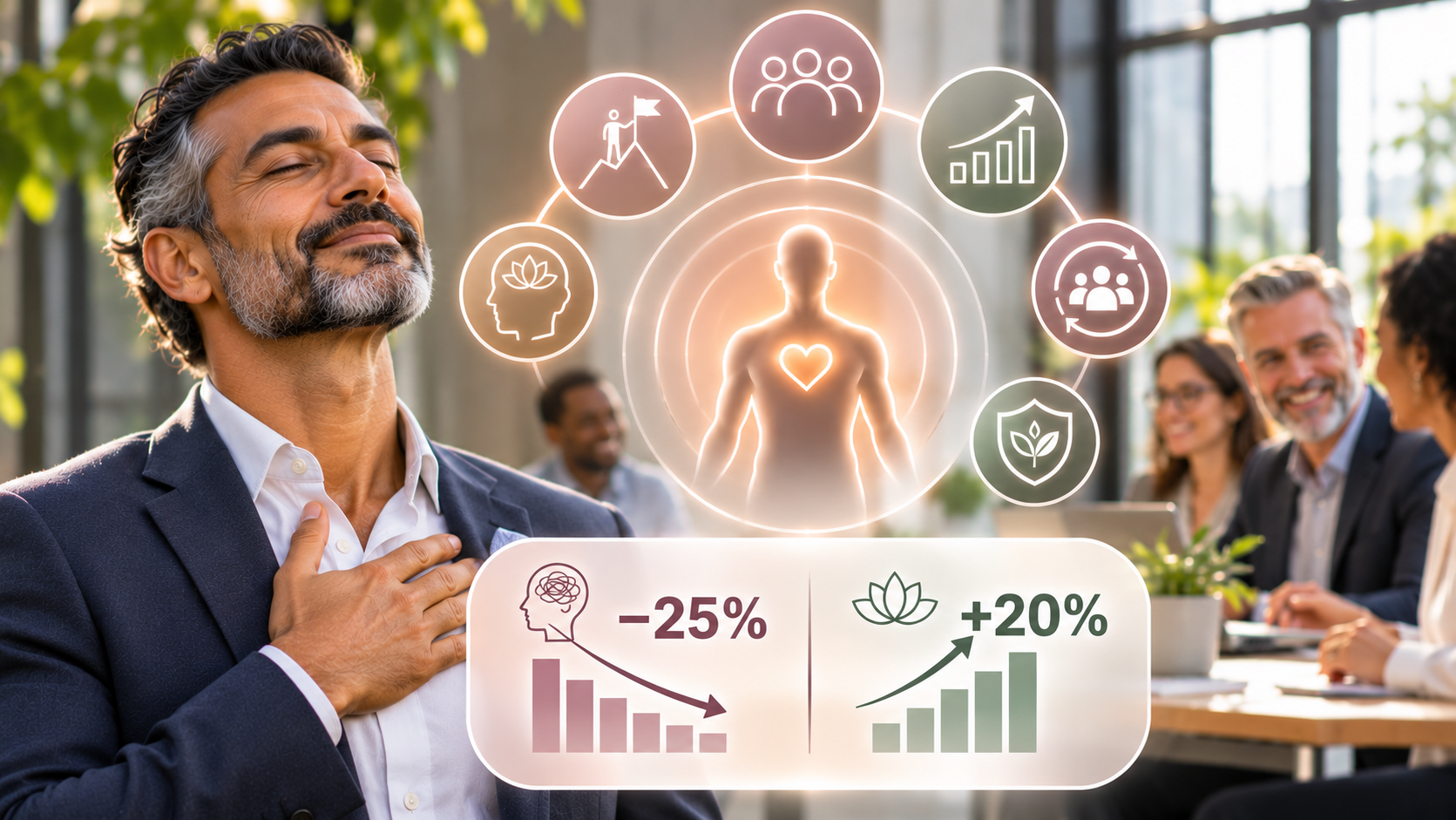
A human-centred approach to organisational performance, illustrating the connection between individual wellbeing and sustainable leadership, engagement, retention and resilience. The visual highlights reported programme outcomes of a 25% reduction in perceived stress and a 20% improvement in wellbeing among 50 senior leaders over four months, demonstrating the value of measuring human capacity alongside organisational performance.
I don’t believe we should have to sacrifice our health, our relationships or our sense of self in order to be successful, because being constantly busy, overwhelmed or running on empty should not be the price of doing work we love.
For organisations, this matters deeply. It shapes leadership, engagement, performance, retention and resilience and it can be measured. Recently I worked with 50 senior leaders at a large UK enterprise going through an AI transformation. Over four months, their perceived stress fell by 25% and their wellbeing rose by 20%, measured from day one.
But for me, those outcomes begin with something much more fundamental: a human being who feels connected to themselves, understands what they need, and has the capacity to respond to life consciously rather than simply react to it.
Why Dubai, and why now
Dubai is leading one of the most exciting conversations in the world about longevity: how we live longer, healthier lives. I believe that conversation belongs in the workplace too. Many of us spend most of our waking hours at work, and it’s where our capacity is most often drained, or rebuilt.
This is why I do this work
My work is about helping people understand the connection between body and mind, recognising the patterns that keep them stuck, and building the physiological capacity and self awareness to make different choices.
It’s about moving beyond managing stress or getting better at coping with pressure and creating the inner conditions in which people can think clearly, feel connected, make considered decisions, enjoy meaningful relationships and contribute from a place of genuine capacity rather than depletion.
Ultimately, I want people to have the capacity to do the work they love, be the people they want to be, and actually enjoy the lives they are working so hard to create.
That’s the change I want to help create.
And that’s why I do this work.
Bal Matharu, Founder, BODY | MIND IQ

Dubai's evolving conversation around longevity meets the future of workplace wellbeing. BODY | MIND IQ connects healthy ageing, lifestyle behaviours and human connection with the workplace, highlighting the opportunity for organisations to create environments where people don't simply work longer, but sustain their health, energy and capacity throughout their lives.